
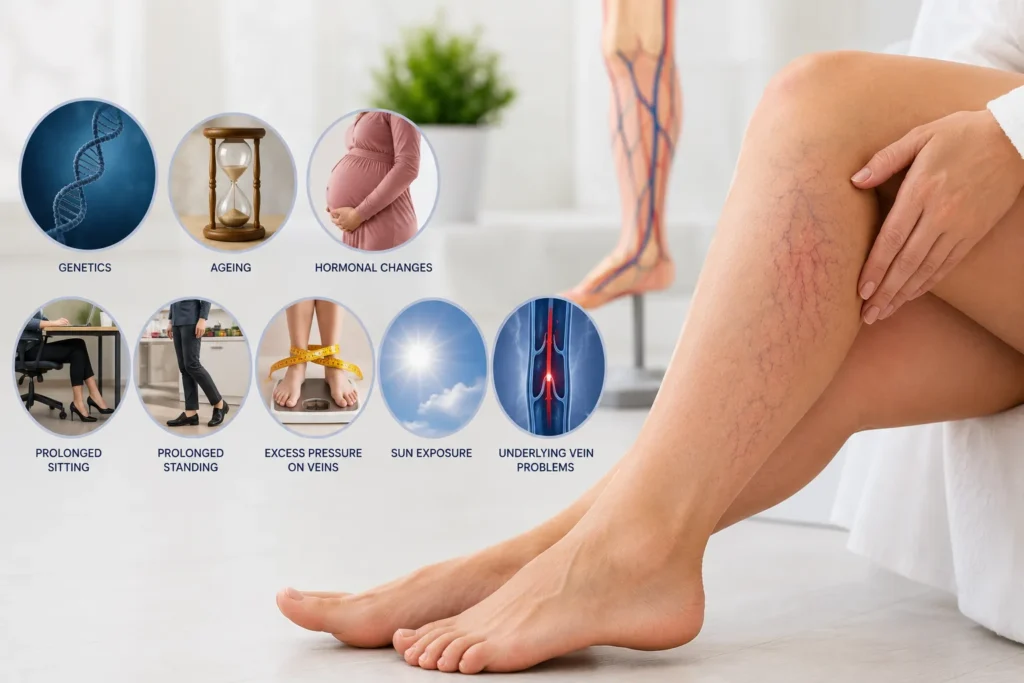
You might have noticed some thin red, blue, or purple veins popping up on your legs, and now you might be wondering what causes spider veins on legs? These tiny visible blood vessels can show up for all sorts of reasons, and most of the time they’re not dangerous. Still, sometimes they hint that there’s more going on with the veins underneath the skin.
For people in the UAE, there can be a mix of genetics, getting older, day to day habits, long hours of standing or even certain conditions outside. Once you understand the main triggers it’s easier to know if you need a proper checkup, or you’re just thinking about spider veins removal.
What Are Spider Veins?
Spider veins are small blood vessels that show up near the skin surface. They often look like fine lines, little branching streaks, or sort of web like patterns, and the color can be red, purple, or blue depending on the vein.
You might spot them on thighs, calves, ankles, and around the knees. Mostly they end up being a cosmetic issue but if you also feel aching, heaviness, swelling or you notice skin changes, then it’s smart to get them evaluated.
Now, the main question is what causes spider veins on legs? There usually isn’t just one reason. A few things together can play a part, and here are some common ones.
- Genetics and Family History
Your genes can really tilt the odds. If someone in your close family has spider veins, varicose veins or other visible vein issues, you may be more likely to develop them too. It’s tied to how strong the vein walls and valves are and how efficiently blood circulates.
You can’t change your family history. But knowing you might be more prone can make you more aware, and quicker to seek professional advice if your legs start changing.
- Getting Older
Age is a timeless factor. As the years stack up, the veins and their valves can slowly lose a bit of efficiency. The veins may grow weaker and become less able to push blood backward toward the heart. Then pressure can build in the surface, or superficial veins, and they might start standing out more.
So even if you never noticed spider veins before, later on they can become more noticeable gradually.
- Hormonal Changes
Hormone shifts can play a role too, even if it feels indirect at first. Fluctuations linked to pregnancy menopause or certain hormonal medications, may affect blood vessels and overall circulation. Pregnancy is especially important, because an increased blood volume and extra pressure on pelvic veins can create strain on the leg veins.
Not everyone who experiences hormonal changes will develop spider veins, still it can raise the risk or probability for some people.
- Standing or Sitting for Long Periods
Your routine matters more than people think. If you spend lots of time standing, pressure in the leg veins can climb. On the other side, sitting for long stretches without moving reduces the muscle action that normally helps blood return toward the heart.
This is common for office workers, retail staff, healthcare teams, hospitality workers and other jobs where standing or sitting happens for hours.
Changing position regularly and staying in motion through the day helps support healthier circulation.
- Excess Pressure on the Veins
Anything that boosts pressure inside the veins may help spider veins appear. Weight gain can add extra pressure on the lower body and affect circulation. And just to be clear, it doesn’t mean every heavier weight person gets spider veins. But keeping a healthy weight supports general vascular health.
If you’re worried about changes in your legs, a healthcare professional can check whether the visible veins are only cosmetic, or if they connect to another venous condition.
- Sun Exposure and Skin Changes
Sun exposure can make small surface vessels more noticeable. For people with lighter or more sensitive skin, repeated sun exposure can affect skin condition and make tiny blood vessels easier to see. Sunlight isn’t always the main cause, but over time it may contribute to visibility.
Using proper sun protection, and caring for your skin, can help lower sun related damage and reduce how prominent those vessels become.
- Existing Vein Problems
Sometimes spider veins are linked to deeper venous issues. If the valves inside the veins do not work the way they should, blood may build up in the lower legs, and that can raise pressure inside the veins. From there you might notice more visible veins and occasionally other signs, like swelling or aching, a feeling of heaviness, or even skin changes.
So, it’s one of the reasons you should not automatically treat every visible vein as 100% cosmetic. A proper medical check can clarify whether there is an actual circulation problem underneath everything.
When Should You Consider Spider Veins Removal?
A lot of people look into spider veins removal mostly because they dislike how the veins look. Others go for treatment because the veins come with discomfort, not just appearance.
What treatment to choose depends on things like the type and size of the veins, where they are located, and why they are happening in the first place. In some cases sclerotherapy or laser-based treatments may be suggested for patients who are good candidates.
Still, a consultation with a qualified medical professional matters a lot before you decide. The clinician can examine the veins and suggest a plan that fits your personal situation.
Can Spider Veins Be Prevented?
You can’t always prevent spider veins, especially when genetics and ageing are involved. But there are habits that may help support vein well-being overall, like staying active, reducing long stretches of sitting or standing when possible, keeping a healthy weight and taking care of your skin.
If your job keeps you in one position for long periods, small movement breaks can help too.
Conclusion
Knowing what causes spider veins on legs can help you spot possible contributors. Genetics, ageing, hormonal shifts, prolonged standing or sitting, increased pressure, sun exposure, and underlying vein problems can all be part of the picture.
Even though spider veins are often harmless, any changes that come with pain, swelling, heaviness, or skin changes should be looked at professionally. And if you’re considering spider veins removal, try not to pick a treatment only because of appearance or random online information.
A real medical consultation can help identify the likely cause of your visible veins and whether treatment makes sense. For UAE residents who are worried about spider veins, a professional assessment is the best place to start if you want to understand your options and aim for results that are safe and realistic.