
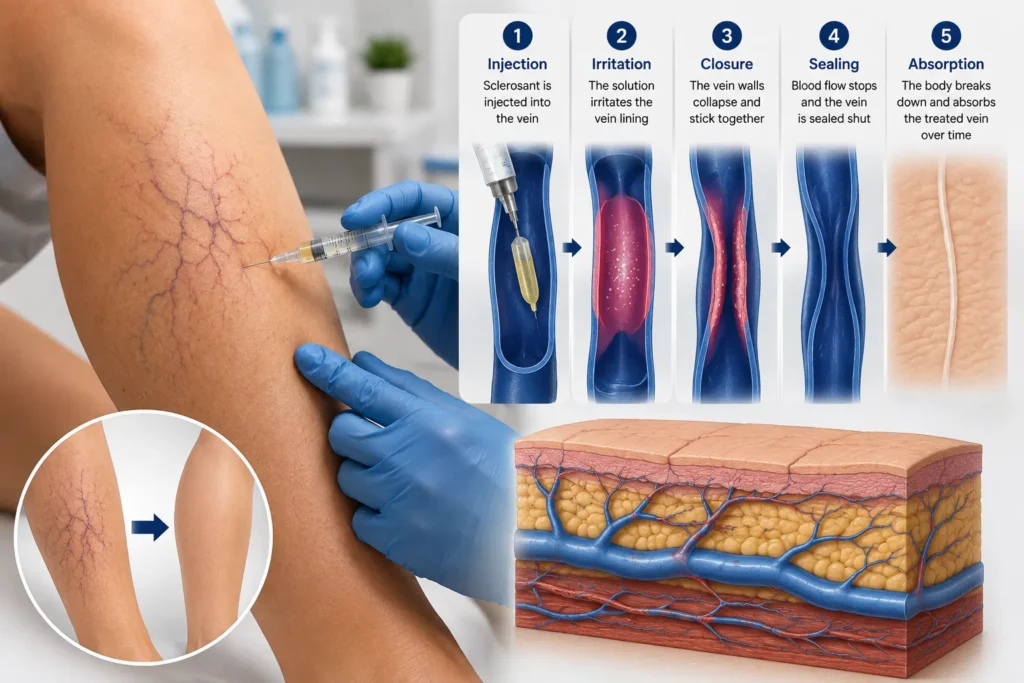
If you’ve got visible spider veins, or a few smaller varicose veins, you might be thinking “how does sclerotherapy even work”, and why the vein looks like it disappears after the injection. Sclerotherapy is a pretty common medical treatment where a specialized liquid is injected into the affected vein. After that, the vein closes off, then the body, step by step, breaks it down and takes it in or absorbs it.
When you know a little about the science, the whole process feels less mysterious, and it also helps explain why the change shows up slowly.
What Is Sclerotherapy?
Sclerotherapy is a minimally invasive way to treat certain small to medium-sized veins. It’s often used for spider veins and for some varicose veins too. In a typical session, a trained clinician injects a sclerosing solution directly into the specific vein that’s causing the problem.
That solution irritates the inner lining of the vein. As a result there’s a controlled reaction, the vein collapses and over time it closes. Once that happens blood gets rerouted through other nearby veins that are healthier.
This is the general idea behind sclerotherapy for spider veins, although the exact plan can differ based on factors like size, location and the actual condition of the veins being treated.
How Sclerotherapy Works Inside the Vein
To understand how sclerotherapy works, it helps to picture what takes place after the injection.
First, the sclerosing agent makes contact with the inner lining of the targeted vein. This creates a controlled form of irritation and inflammation inside the vessel. Then the vein walls start to “stick” together, which reduces, and often stops blood flow through that particular vein.
Afterward, the closed vein becomes less noticeable. Over time, the body naturally breaks down the treated tissue and removes it.
So, the whole process is meant to target the unwanted vein, not to shut down circulation in the surrounding area.
Why Does the Vein Disappear?
A super common question with sclerotherapy for spider veins is whether the vein is physically taken out of the body.
Usually, it isn’t removed surgically. Instead, the treated vein is closed and gradually absorbed. Once it’s closed, blood doesn’t need to travel through it anymore. Then the body processes what remains over time. As the vessel becomes less prominent, the visible spider vein can fade away.
This is also why results are often gradual, some veins may soften and fade relatively soon, while others can take several weeks or more before they fully diminish.
What Happens Immediately After Treatment?
Right after sclerotherapy, the treated area may look different than before. Some people notice temporary redness, swelling, bruising or mild discomfort around the injection sites. Also, the treated vein can look darker or a bit more obvious at first, before it starts to fade down.
These reactions can vary a lot based on the person, the number of veins treated and the technique your clinician uses.
Your healthcare professional should walk you through what to expect and share the specific aftercare steps you should follow.
How Long Does It Take for Veins to Fade?
There isn’t one universal timeline. Smaller spider veins often fade faster than larger veins, or veins that are more resistant. The number of veins treated, their size, the kind of sclerosing solution used and your own healing response can all influence how things turn out.
Sometimes a vein needs more than one treatment session to reach the appearance you’re aiming for. During follow-up visits, your clinician can review how the treated area is doing and recommend whether further sessions make sense.
Is Sclerotherapy Only Used for Spider Veins?
Even though sclerotherapy for spider veins is the most well-known use, it can also be used for certain other superficial veins.
Whether it’s a good fit depends on the vein that’s being treated and on your overall vascular health. Larger veins, underlying venous issues or certain medical conditions may call for a different plan or extra evaluation.
So, a proper consultation matters a lot before deciding if sclerotherapy is the right choice.
Why Blood Flow Is Not Usually Affected
It can feel a little alarming that a vein is intentionally closed, but the body already has an extensive venous network that carries blood back toward the heart.
That superficial vein is typically not critical to total circulation. Once it closes, blood can reroute through other healthy veins.
Still, that doesn’t automatically mean every visible vein should be treated. A medical assessment helps confirm whether those veins are good candidates for sclerotherapy and whether there’s an underlying circulation problem that should be addressed first.
What Makes Sclerotherapy Different From Simply Removing a Vein?
Sclerotherapy is different, from just taking out a vein in the usual way. In sclerotherapy, a doctor injects a specific solution right into the targeted vein, and that solution helps close it from the inside. Then over time, the body handles it and removes the treated vessel on its own, bit by bit.
So, it isn’t the same as a surgical approach where a vein might be physically removed. With sclerotherapy, the treatment is usually done as an outpatient procedure which means that you can typically go home the same day. There’s also no need for a surgical cut or incision in the vein being treated.
Whether sclerotherapy is the right move depends on the type of vein you have, how severe it is and your personal health situation. Basically, the decision is not one size fits all.
Choosing Sclerotherapy for Spider Veins
If spider veins are bothering you, or they are making you feel uneasy about your appearance, it may be worth bringing up sclerotherapy for spider veins with a qualified medical professional. A proper consultation lets the clinician look at your veins, talk through your concerns, check your medical history and decide whether sclerotherapy really fits your case.
You’ll also get a chance to cover what results could look like, what side effects might happen, and what aftercare you should follow. And, depending on what’s going on, you may need more than one session.
Conclusion
Knowing how sclerotherapy works is the key to know why those treated veins tend to fade away gradually, rather than disappearing instantly after the injection. The sclerosing solution creates a controlled irritation inside the vein. That irritation makes the vein walls close. After that, your body slowly breaks down and absorbs the treated vessel, while blood is redirected through more healthy veins nearby.
For suitable patients, sclerotherapy for spider veins can be a helpful option for reducing the look of unwanted superficial veins. Still, because everyone’s veins are unique and medical circumstances can vary, it’s important to get a professional evaluation first.
If you’re considering sclerotherapy, talk with a qualified healthcare professional to confirm whether it matches your vein situation, and to understand what results you can reasonably expect.