
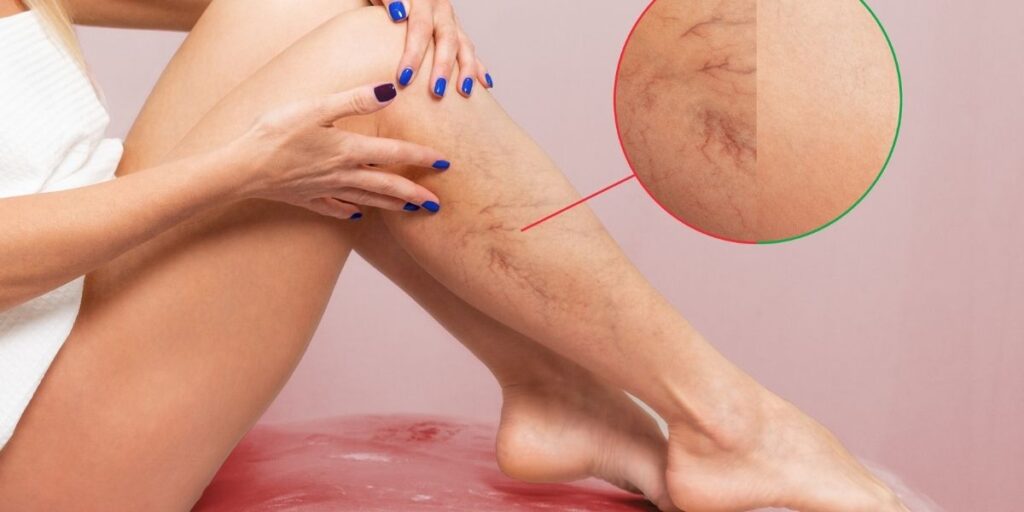
Most people notice the veins first.
A twisted, bluish cord running down the back of the calf. A dull ache in the legs by the end of a long day. Swelling around the ankles that was not there a year ago.
Varicose veins are not just a cosmetic concern. They are a sign that the venous system in the legs is under pressure — and left unaddressed, they can progress into more serious complications including venous ulcers, skin changes, and blood clots in the superficial veins.
What a lot of Dubai residents do not realise is that the way many people live and work here creates a particular set of conditions that make varicose veins more likely. A combination of heat, sedentary work, diet, and lifestyle factors means the problem is more common in this part of the world than it might otherwise be — and it is often more advanced by the time someone comes to see us.
Here are nine real reasons varicose veins in Dubai are so prevalent — and what can be done about them.
First: What Is Actually Happening Inside the Vein?
Before getting into the causes, it helps to understand the basic mechanism.
Veins carry blood back to the heart. In the legs, this means pushing blood upward against gravity. To help with this, veins contain small one-way valves that open to let blood through and then close to stop it flowing back down.
When these valves weaken or become damaged, blood does not move efficiently toward the heart. Instead, it pools in the vein. The vein walls stretch under this pressure, the vein enlarges, and eventually the twisted, bulging shape of a varicose vein becomes visible through the skin.
The great saphenous vein and the small saphenous vein — the main superficial veins of the leg — are the ones most commonly affected.
1. Prolonged Standing — the Occupational Risk Most People Ignore
If your job keeps you on your feet for most of the day — and many jobs in Dubai do — your veins are working against gravity for hours at a stretch without much help from leg muscle movement.
When you walk, the calf muscles contract and act as a pump, squeezing blood upward through the veins. When you stand still, that pump is largely inactive. The blood sits in the lower leg veins, pressure builds, and over time the valves bear the strain.
Retail workers, hospitality staff, healthcare workers, and people who stand at counters or workstations for long shifts are all at higher risk of developing varicose veins than people who move around regularly throughout the day.
2. Prolonged Sitting — the Other Side of the Same Problem
Sitting for long periods causes the same pressure build-up, just from a different angle.
Office work in Dubai often means eight to ten hours at a desk with minimal movement. When the legs are bent at the hip and knee for hours, blood flow in the lower limbs slows. The venous return to the heart becomes less efficient, pressure increases in the superficial veins, and the valves are placed under sustained stress.
The position matters too. Crossing the legs while sitting compresses the veins further and restricts flow even more.
3. Genetics and Family History
Varicose veins run in families. If one or both of your parents had them, your risk of developing them is significantly higher than someone with no family history.
The genetic component relates to the inherited strength and elasticity of vein walls and valves. Some people are simply born with veins that are more prone to valve dysfunction than others. No amount of lifestyle adjustment eliminates this risk entirely — but it can be managed and treated effectively.
When patients come to see us at Dr Abdul Rahman’s clinic, family history is one of the first things we ask about, because it shapes how we approach both diagnosis and treatment planning.
4. Age — and Why It Matters More Than People Realise
As we age, the tissues that support the walls of veins begin to lose some of their tone. The valves inside the veins can also weaken over time, becoming less effective at preventing blood from flowing backward.
This is a gradual process. Most people do not notice the first signs of varicose veins until their 30s or 40s, but the underlying changes in vein structure can begin earlier. The risk increases steadily with age, which is why varicose veins become progressively more common in older adults.
The good news is that early treatment is far more straightforward than treatment at an advanced stage. We routinely see patients who wish they had come in years earlier, before the veins had become more extensive or caused skin changes.
5. Pregnancy
Pregnancy significantly increases the risk of varicose veins — and often accelerates their development in women who were already predisposed.
During pregnancy, blood volume increases substantially to support the growing baby. This places greater demand on the venous system. At the same time, the expanding uterus places pressure on the large veins in the pelvis, which slows the return of blood from the legs and increases pressure in the leg veins.
Hormonal changes during pregnancy also affect the walls and valves of veins, making them more susceptible to stretching. Women who have had multiple pregnancies are at higher risk than those who have had one.
6. Excess Body Weight
Carrying excess weight increases the pressure on the veins of the lower limbs. The heavier the load the legs carry, the more the venous system has to work to return blood to the heart.
Over time, this sustained pressure causes the vein walls to stretch and the valves to weaken. Obesity is a well-established risk factor for varicose veins and is also associated with faster progression once varicose veins have developed.
Even a moderate reduction in body weight can reduce venous pressure meaningfully and slow the development of the condition.
7. Dubai’s Extreme Heat
This is a factor that is specific to life in this part of the world — and one that rarely gets enough attention.
Heat causes the blood vessels throughout the body to dilate. In the legs, this means the veins widen, which further reduces the efficiency of the valves and makes it harder for blood to be pushed back upward against gravity.
In Dubai’s summer months, when temperatures regularly exceed 40°C, the venous system is under this additional thermal stress for months at a time. For people who are already predisposed to varicose veins, or who have early-stage venous insufficiency, the sustained heat of a Dubai summer can accelerate the progression of the condition noticeably.
8. Low Physical Activity and Lack of Leg Muscle Use
The calf muscle is sometimes called the “peripheral heart” because of the role it plays in pumping blood back up from the legs. Every time the calf contracts — during walking, climbing stairs, or any activity that flexes the ankle — it squeezes the veins and pushes blood upward.
A lifestyle with low physical activity means the calf pump is largely idle. Without that regular muscular action, venous return depends more heavily on the valves alone. Over time, valves that are bearing more of the load than they should will begin to fail.
Regular walking — even 30 minutes a day — makes a genuine difference to venous health. It is one of the lifestyle recommendations we give to all patients with varicose veins, regardless of what treatment approach is appropriate for their case.
9. Gender — Why Women Are More Commonly Affected
Women develop varicose veins more often than men. The main reason is hormonal.
Female hormones, including oestrogen and progesterone, affect the tone and elasticity of vein walls. Progesterone in particular relaxes the walls of blood vessels, which can make veins more prone to stretching and valve dysfunction.
This hormonal influence explains why women who are pregnant, on hormonal contraception, or going through hormonal changes at different life stages are at increased risk. It also explains why, statistically, women make up a higher proportion of varicose vein patients than men — though men are certainly not immune.
What Happens If Varicose Veins Are Left Untreated?
Varicose veins are progressive. In many cases they worsen over time rather than staying the same.
The complications that can develop include:
Venous ulcers — Open sores on the lower leg caused by poor circulation and increased pressure in the skin tissue. These can be slow to heal and prone to infection.
Superficial thrombophlebitis — Inflammation and clot formation in the superficial veins, which causes pain, redness, and swelling along the affected vein.
Bleeding — Varicose veins that sit close to the skin surface can bleed if they are bumped or injured, sometimes more severely than expected.
Hyperpigmentation — Darkening of the skin around the affected veins, caused by leakage of blood into surrounding tissue over time.
Lipodermatosclerosis — Hardening and inflammation of the skin and underlying fat layer, which develops in more advanced venous disease.
None of these complications are inevitable — but they are more likely if the condition is not assessed and treated.
Treatment Options Available at Dr Abdul Rahman’s Clinic
We offer a range of treatment options for varicose veins in Dubai and Abu Dhabi, matched to the severity of each patient’s condition.
For mild cases and symptom management, compression stockings reduce venous pressure and help control symptoms during daily activity.
Sclerotherapy is a minimally invasive procedure in which a solution is injected directly into the affected vein, causing it to close and eventually fade. It is effective for smaller varicose veins and spider veins.
Endovenous laser treatment uses laser energy delivered inside the vein to close it. It is a well-established, minimally invasive procedure with a good track record for larger varicose veins.
For more advanced or complex cases, surgical options including vein stripping and ambulatory phlebectomy may be appropriate. These are discussed with patients based on the findings of a full diagnostic assessment.
Diagnosis begins with a physical examination and review of medical and family history, followed by duplex ultrasound if needed — which gives us a clear picture of the venous anatomy and how the valves are functioning before any treatment decision is made.
FAQs
Are varicose veins dangerous if left untreated?
Varicose veins can progress over time and lead to complications including venous ulcers, skin changes, superficial blood clots, and bleeding. Early assessment and treatment reduces the risk of these outcomes.
Can varicose veins go away on their own?
No. Once the valves inside a vein have become damaged, they do not recover on their own. Lifestyle changes can slow the progression and manage symptoms, but treatment is needed to close or remove the affected veins.
Is varicose vein treatment painful?
Most minimally invasive procedures such as sclerotherapy and endovenous laser treatment involve minimal discomfort. Dr Abdul Rahman discusses what to expect from each procedure before treatment begins so patients know what the process involves.
How do I know if I need treatment for varicose veins?
If you have visible bulging veins, leg aching or heaviness, swelling, skin changes, or any of the other symptoms described above, a consultation is the right next step. Early assessment means more treatment options and a better outcome.
Does Dr Abdul Rahman treat patients in both Dubai and Abu Dhabi?
Yes. Dr Abdul Rahman provides varicose veins treatment across Dubai and Abu Dhabi. Get in touch to book an appointment.
Book a Consultation
If you are experiencing any of the symptoms described above — or if you have noticed changes in the appearance of the veins in your legs — the right step is to get a proper assessment before the condition progresses further.
At Dr Abdul Rahman’s clinic, we assess and treat varicose veins in Dubai and Abu Dhabi using the full range of diagnostic and treatment options available. We take the time to understand each patient’s condition properly before recommending any course of treatment.
Book an appointment directly to get started.