
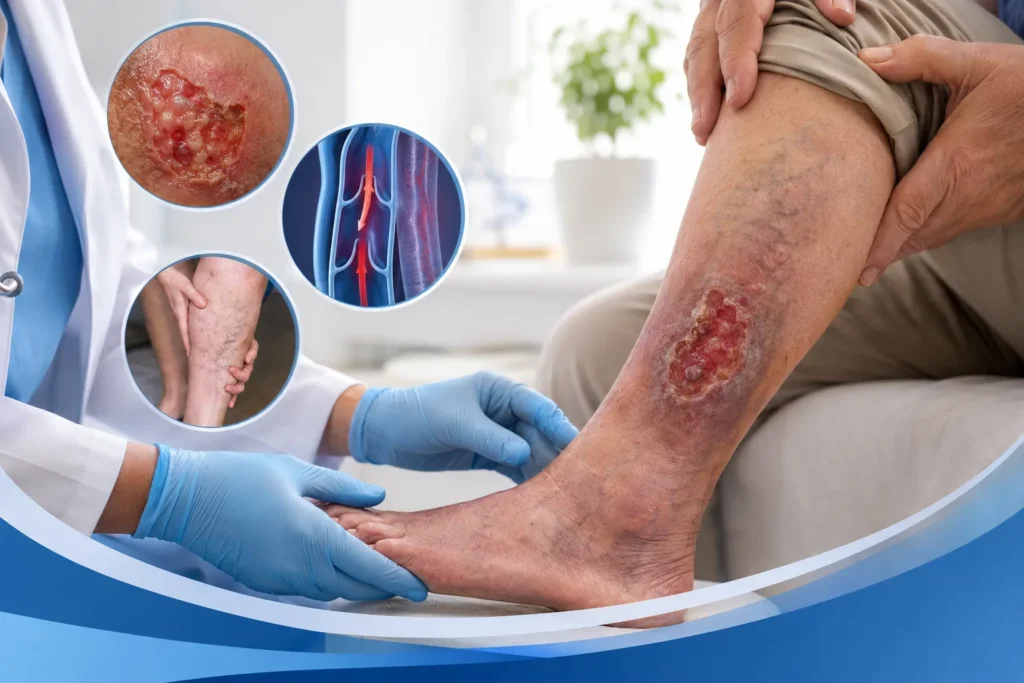
Wounds on your legs that do not seem to heal well are irritating, uncomfortable and even worrisome. Although small cuts and scratches normally get better within a few weeks, persisting or recurring ulcers may indicate some circulatory problems.
Identifying the signs of leg ulcers promptly is crucial as it will help to avoid complications and treat them effectively. Among the most widespread types of ulcers are venous ulcers, which arise because of inefficient return of blood from legs to the heart.
What Is a Leg Ulcer?
A leg ulcer is an open sore on the surface of the skin that results from its breakdown and failure to heal well. Usually these ulcers are located on the lower part of the leg, mainly around the ankles, but they can arise in other places as well.
There are a number of possible causes of ulcers: they may be related to circulatory problems, diabetes, trauma, infection, prolonged pressure or other health issues. In order to be able to treat ulcers effectively it is important to identify the cause of the problem as treatment differs accordingly.
The most common cause of ulcers is chronic venous insufficiency, which is a disease that arises as a result of the damage to veins and impaired blood flow in the veins.
Common Symptoms of Leg Ulcers
Although the symptoms of leg ulcers differ from person to person, there are certain leg ulcer symptoms that should not be neglected.
Venous ulcers usually start as shallow sores developing gradually rather than instantly. They are commonly located on the inner side of the ankle and may leak some fluid. Skin around the sore is often discolored, puffy and/or itchy.
Besides, there are other symptoms of leg ulcers that should be paid attention to:
- Sore that has not healed within several weeks.
- Swelling in the lower part of the leg/ankle.
- Heaviness or aching in the legs, particularly after standing.
- Changes in color of the skin (it turns brown or reddish).
- Thickened skin around the ulcer.
- Discomfort around the ulcer (mild to moderate).
It is worth noting that symptoms tend to improve when the leg is raised and deteriorate when the patient stands on his/her feet for a long time.
How Do Venous Ulcers Differ from Other Types of Ulcers?
Venous ulcers appear as the result of accumulation of blood in the veins, whereas proper blood flow from the legs is impeded. The increased pressure in the veins damages skin and soft tissues gradually causing the development of ulcers.
Unlike other types of ulcers resulting from poor arterial circulation, venous ulcers are usually less painful unless an infection has developed. The surrounding skin indicates the presence of chronic venous disease such as varicose veins, edema, skin pigment changes.
Knowing leg ulcer symptoms can help the doctor to find out the cause of ulcers.
Other Health Issues May Lead to Leg Ulcers
Not every leg ulcer is caused by vein problems. Arterial ulcers appear as a consequence of poor circulation, which leads to insufficient oxygen supply to tissues. These ulcers tend to be painful, particularly at night or when the legs are elevated. They develop mostly on feet or toes.
Ulcers in diabetics can be the result of nerve damage and poor circulation that causes the development of diabetic foot ulcers.
Professional evaluation of the problem is necessary before any treatment of the ulcers can be applied.
When to Visit a Vascular Surgeon?
Although minor wounds can be treated with simple first-aid care, persistent ulcers should be examined by a specialist.
Visiting a vascular surgeon is necessary in case of the following symptoms of ulcers:
- Wounds that have not healed in 2-4 weeks.
- Recurrent ulcers in the same place.
- Increased swelling in one or both legs.
- Visible varicose veins along with skin changes.
- Persistent heaviness or aching of legs.
- Signs of infection (redness, warmth, pus, pain).
Vascular surgeons specialize in the treatment of conditions associated with veins and arteries. If poor circulation is one of the causes of ulcers, timely identification of the problem can be helpful for faster healing and reduction of the chance of recurrence.
How Venous Ulcers Are Diagnosed
First of all, detailed medical history and physical exams are conducted during the diagnosis of the problem. The doctor evaluates the ulcer and examines the surrounding skin to find out whether there is chronic venous disease.
As a rule, ultrasound duplex scan is recommended. It is a painless diagnostic procedure that helps to evaluate blood flow in the veins and identify the presence of any damage or abnormal valve function that causes the development of the ulcers. The results of the tests will help to choose the most appropriate treatment.
Treatment of Venous Leg Ulcers
The main goals of treatment are to heal the ulcers and to improve circulation.
For improvement of the blood flow compression therapy is often applied. Wounds are cleaned regularly and the process of healing is stimulated.
Apart from this, depending on the condition of the veins, additional treatment can be necessary to improve the blood flow and minimize the chance of ulcers in the future. Your vascular specialist will recommend the most effective treatment for you.
Walking regularly, elevating the legs while sitting, maintaining healthy body weight and avoiding standing for a long period can also be useful in the treatment of venous ulcers.
Importance of Prompt Treatment
Neglecting persistent leg ulcer symptoms can cause some complications. Untreated ulcers may become infected, increase in size or take several months to heal.
Early examination helps to identify the underlying cause of the problem and to avoid further complications. It also increases the probability of successful treatment and decreases the risk of recurrent ulcers in the future.
A lot of people do not visit specialists in case of persistent leg ulcers as they do not cause much pain, but the pain is not the only symptom that should be taken into account.
Conclusion
Persistent wounds on your legs should not be neglected. Identification of leg ulcer symptoms will help to find out whether it is venous ulcer or some other circulation disorder.
If your wound does not heal fast, recurs, is accompanied with swelling, skin discoloration or visible varicose veins, it is important to visit a specialist. The vascular surgeon will identify the reason for the problem and will recommend the right treatment for you.