
Most people with diabetes watch their blood sugar closely. Their feet come a distant second, if they think about them at all. That is risky. Years of high sugar can damage the nerves and blood vessels in your legs, so a tiny blister can turn into a deep wound before you even notice it. This is why diabetic foot problems are among the top reasons people with diabetes end up in the hospital. The good news is that most of these problems can be stopped. You don’t need expensive tools or special training. You need a few daily habits, regular checkups and the sense to act early. In this post, we will cover what goes wrong, what to look for and the simple steps that protect your feet.
Why Diabetes Harms Your Feet
Two things go wrong:
- Nerve damage: Nerves in your feet stop sending pain signals. You can step on a pin or wear a tight shoe and feel nothing.
- Poor blood flow: Narrow blood vessels bring less blood to your feet. Cuts heal slowly and infections spread faster.
Dry, cracked skin makes it worse because germs get an easy way in. Together, these problems cause most diabetic foot complications, such as ulcers, deep infections and, in serious cases, amputation. Diabetic feet can also change shape over time, which creates new pressure spots.
Diabetic Foot Symptoms You Should Never Ignore
Many diabetic foot symptoms are quiet at first. Watch for:
- Tingling, burning or numbness
- Leg pain while walking that eases when you rest
- Cuts, blisters or sores that heal slowly
- Skin that turns red, pale or bluish
- Swelling or a warm patch on the foot
- Thick calluses or deep cracks in the heels
- Ingrown or fungus-infected toenails
- Bad smell or fluid from a sore
Having no pain does not mean you have no problem. With nerve damage, painless is often the dangerous part.
Daily Habits for Diabetic Foot Prevention
Good diabetic foot prevention is boring and simple. That is why it works.
- Look at your feet every day. Check the soles, heels and between the toes. Use a mirror or ask someone to help.
- Wash in lukewarm water. Test it with your elbow, not your foot. Dry well between the toes.
- Moisturise the skin, but not between the toes. Damp gaps invite fungus.
- Cut nails straight across. File sharp edges. Don’t dig into the corners.
- Never walk barefoot. This includes at home and at the beach.
- Skip hot water bottles and heating pads. You may not feel a burn until it is serious.
- Don’t cut corns or calluses yourself. Avoid corn plasters with acid as well.
- Stop smoking. It cuts blood flow to your feet even more.
- Keep your blood sugar in your target range. Nothing else protects your nerves as much.
Choosing the Right Footwear
Bad shoes cause many foot wounds. Pick shoes that fit well, have enough room for your toes and have soft, seamless insides. Buy them in the evening, when your feet are a little swollen. Before you put a shoe on, run your hand inside to check for stones or rough spots. Wear clean, dry socks without tight elastic. If your feet have changed shape or you have lost feeling, ask about custom shoes or insoles.
Why a Regular Diabetic Foot Examination Matters
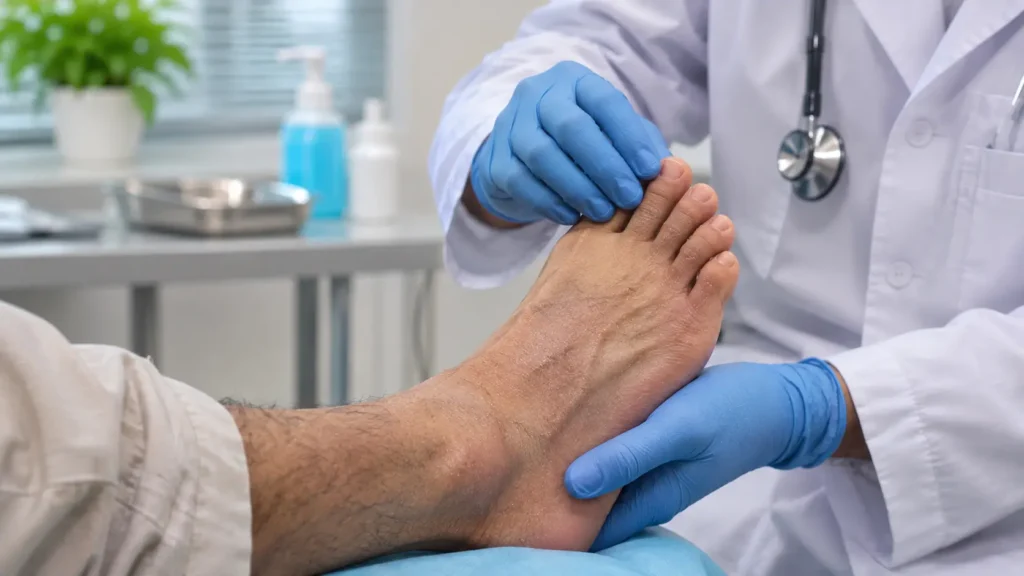
You can’t catch everything at home. A proper diabetic foot examination checks your skin, nails and foot shape. The doctor also feels the pulse in your feet and tests your sense of touch, often with a thin nylon thread. A full diabetic foot assessment then puts you in a risk group, which tells you how often you need to come back.
Get checked at least once a year. If you already have numbness, poor blood flow or a past ulcer, go more often. Take your shoes and socks off at every doctor visit, even if the visit is for something else.
When to See a Diabetic Foot Doctor
Don’t wait for a problem to get worse. See a diabetic foot doctor the same day if you notice:
- An open wound or blister
- Redness that is spreading
- Pus, swelling or a bad smell
- Fever with any foot injury
- Skin that looks black or very pale
A diabetic foot clinic is a good choice because it brings the needed checks and care under one roof, so nothing gets missed. You can read more about care options on the diabetic foot page at drabdulrahman.com.
What Diabetic Foot Treatment Involves
Diabetic foot treatment depends on how far the problem has gone. It may include:
- Cleaning the wound and removing dead tissue
- Special dressings that keep the wound moist and clean
- Antibiotics when there is an infection
- Taking pressure off the sore with a cast, boot or special shoe
- Procedures to open blocked blood vessels
- Surgery in severe cases
Early treatment is simpler, cheaper and far more likely to save the foot. Late treatment is where amputations happen.
Diabetic Foot Management for the Long Term
Good diabetic foot management is a team effort between you and your doctors. Keep your sugar, blood pressure and cholesterol under control. Follow your daily foot routine. Keep your appointments, even when your feet feel fine. Tell your doctor about any change, however small. People who do this have far fewer serious problems.
Start Protecting Your Feet Today
You don’t need to do everything at once. Start tonight: check both feet, wash them, dry them well and put on clean socks. Then book a checkup if you haven’t had one this year. A few minutes a day costs very little compared with a wound that won’t heal.